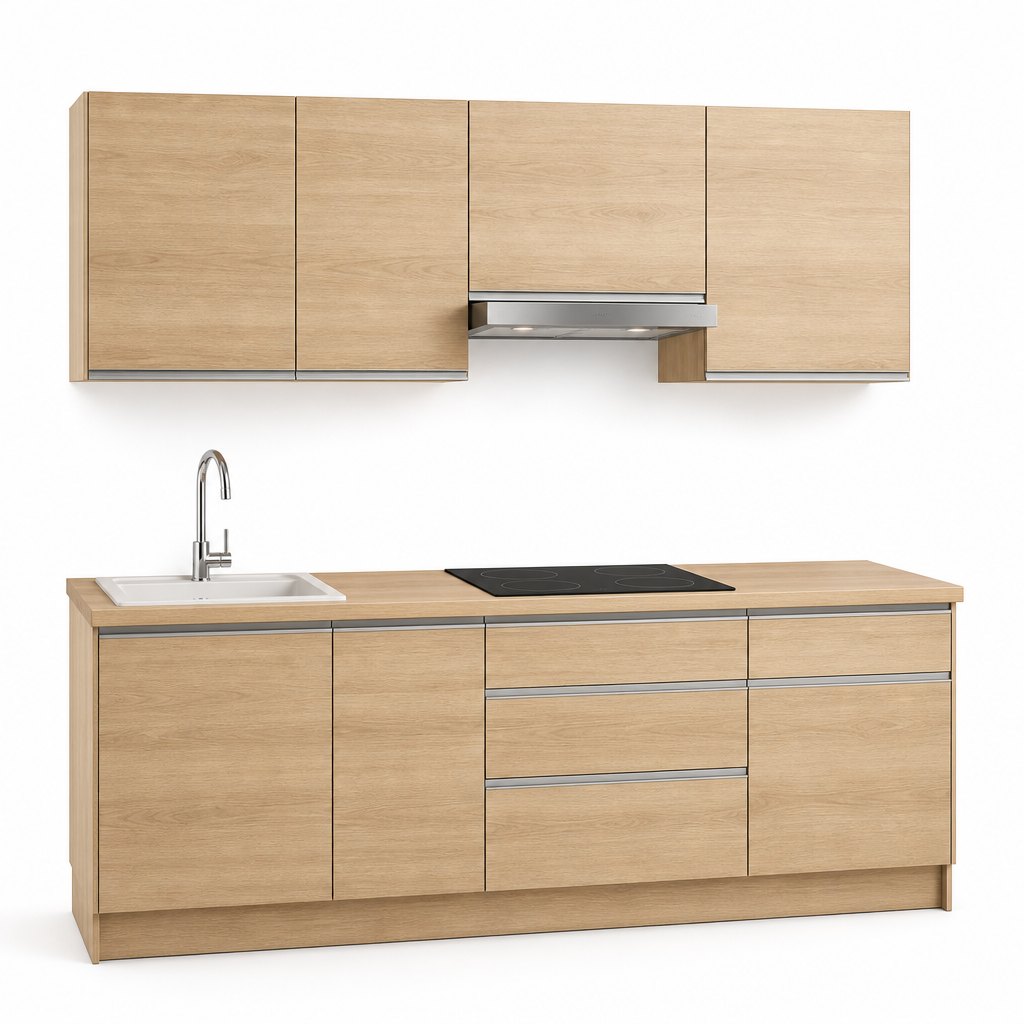
Smoked Oak Veneer Kitchen — Real Veneer, Wire-Brushed Before Lacquering — FAME kitchen cabinet manufacturer
New 2026 · Second Finish Cycle · Smoked Oak Veneer · 19mm Slab

Smoked Oak Veneer Kitchen — Real Veneer, Wire-Brushed Before Lacquering

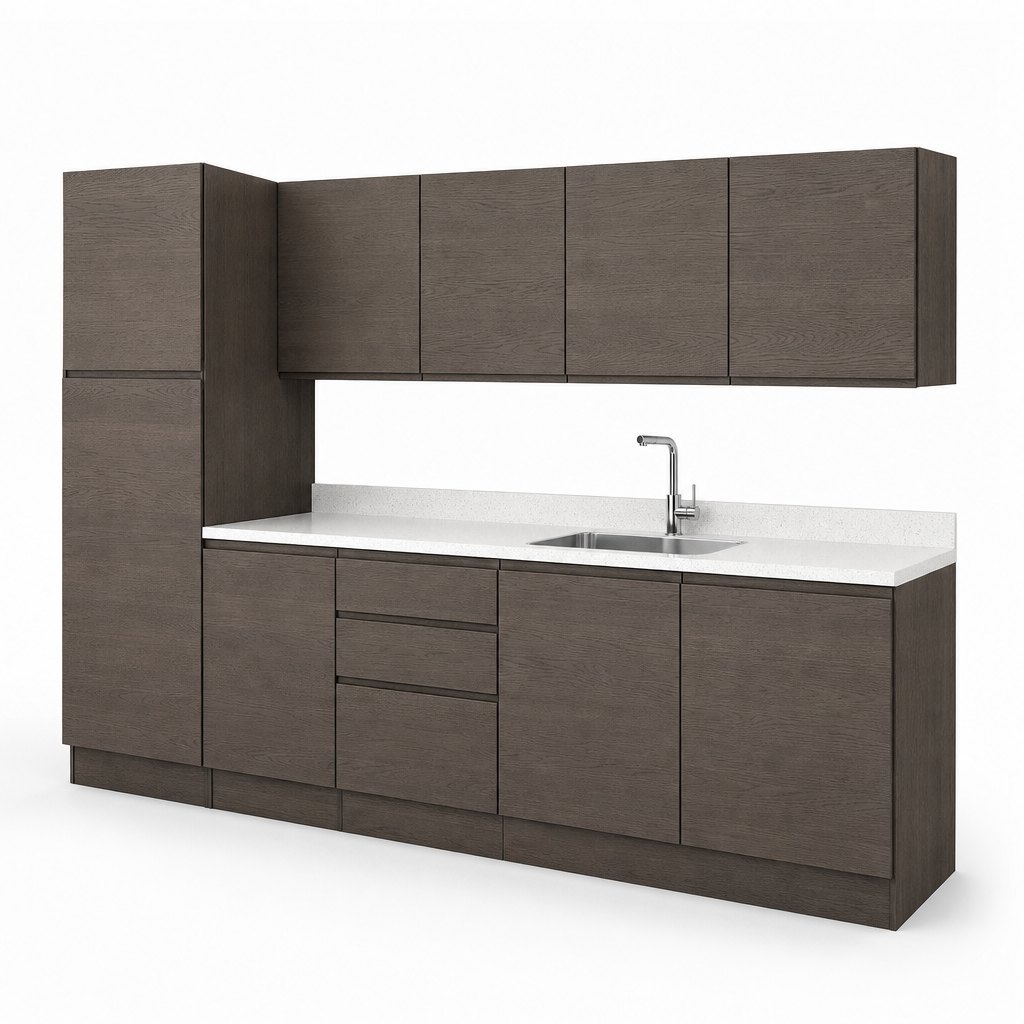
Smoked oak is the answer to a question dark wood kitchens keep failing: walnut and stained oak look expensive for two years and then look flat, because a stain sits on the surface and a print repeats. Smoking is not a stain. The oak is fumed so the tannin in the timber darkens through the top 1 to 2mm of the veneer, which means the colour is in the wood and the grain stays visible under it, and a scratch reveals smoked timber rather than pale timber under a brown film. This kitchen uses a real 0.6mm smoked oak veneer, wire-brushed across the grain before lacquering so the early wood is cut back and the late wood stands proud — that is where the texture comes from, not from a printed emboss. Then a matt lacquer at 6 to 8 gloss units, thin enough that the open grain still reads at arm's length. The front is a 19mm flat slab with a milled finger groove along the top edge and 3mm shadow gaps held by the drilling, because a veneered face has no frame or beading to hide a racked box. Behind it, 18mm plywood carcasses on 32mm system drilling, 720mm base boxes on a 100mm recessed plinth, Blum TandemBox soft-close, and a 20mm white quartz top with a fine grey speckle. Deliberately the darkest wood in the range that is still a wood and not a paint — the walnut kitchen is browner and warmer, this one is grey-brown and cooler, and the difference is obvious the moment two doors are held side by side. A 20-piece OEM/ODM programme for importers, kitchen studios and residential developers.

  • 0.6mm real smoked oak veneer on a 19mm MDF core, sliced from one flitch per order so the grain runs continuously across a run instead of restarting at every door — the colour comes from fuming the timber, not from a stain film sitting on top of it
  • Wire-brushed across the grain before lacquering: the soft early wood is cut back and the harder late wood stands proud, so the texture is in the veneer rather than embossed into a melamine or foil
  • Matt lacquer at 6 to 8 gloss units, thin enough that open grain still reads at arm's length, with a water-repellent sealer so a splash near the sink does not raise the fibres
  • 19mm flat slab door, sharp square edge with a 1mm arris, no frame and no applied moulding — a veneered face has nothing to hide a misaligned box behind, so the 3mm shadow gaps must be held by the drilling
  • Milled finger groove along the top edge of base doors and the bottom edge of wall doors, 20 x 10mm and sealed as part of the spray, so the run stays handleless without a metal profile to date it
  • Veneer matched door-to-door in a four-way sequence per run, with the face grain vertical on doors and horizontal on drawer fronts unless the drawing says otherwise — the one detail that separates a veneered kitchen from a wood-effect one
  • 18mm plywood carcass with sealed ABS edges, 8mm back panel and 32mm system drilling; plywood rather than chipboard because a 19mm veneered slab has no frame to absorb a rack and the shadow gaps will show every millimetre of it
  • 720mm base carcasses on adjustable legs behind a 100mm plinth recessed 60mm, and 330mm deep wall units at 720mm high with one adjustable shelf — a 900mm finished worktop height on a standard UK and EU grid
  • Blum TandemBox soft-close drawers rated 30 to 70kg by module width and Blum clip-on concealed hinges with three-way adjustment; a cost-equivalent runner set on the same 32mm drilling for entry price points
  • 20mm white quartz worktop with a fine grey speckle, 620mm deep, square edge and a 100mm matching upstand — white rather than a warm stone, because a cream worktop pulls the smoked oak towards brown and loses the cool grey cast
  • Module widths of 300 / 400 / 500 / 600 / 900 / 1000mm with 570mm deep base boxes, so a run plans on a 100mm grid and still lands on standard sink and appliance apertures without a bespoke carcass
  • Veneer is a natural material: send a signed 200 x 300mm face panel or accept our batch panel before production, because no two flitches smoke to exactly the same grey-brown and a screen swatch cannot show the grain

SKU: FAME-KC-SOV · MOQ: 20 pcs · Sample order available

Specifications

Programme scopeFull kitchen run in one veneer and one door style — base units, wall units, tall units and a veneered plinth; module widths of 300 to 1000mm on a 100mm grid with a 3mm front gap held across the range; supplied flat-packed or assembled, with or without worktop
Construction18mm plywood carcasses with sealed ABS edges, glued and dowelled corners and confirmat fixings at the load points; 8mm back panel; 32mm system drilling on all side panels
Fronts19mm MDF slab doors and drawer fronts with 0.6mm smoked oak veneer on both faces and a solid oak or matching veneer edge band, square edge with a 1mm arris; 20 x 10mm milled finger groove; veneer matched in a four-way sequence per run
FinishWire-brushed across the grain before lacquering, then a matt polyurethane at 6 to 8 gloss units with a water-repellent sealer; open grain visible at arm's length; colour from fuming the oak, not from a stain film; stain depth to a supplied panel, with a lighter or darker smoke available on the same veneer
Carcass finishInterior in a white or light grey melamine at 18mm with sealed edges, so a shelf is a wipe-clean surface rather than a veneered one; veneered interior on request for open-shelf and glass-door units
Worktop20mm white quartz with a fine grey speckle, 620mm deep, square edge and a 100mm matching upstand from the same slab; 38mm solid smoked oak, 20mm terrazzo-look and 12mm sintered stone alternatives on the same carcass
HardwareBlum TandemBox soft-close full-extension drawers rated 30 to 70kg by module width; Blum clip-on concealed hinges with three-way adjustment; a cost-equivalent runner and hinge set on identical drilling for entry price points
Internal fit-outOne adjustable shelf per wall unit, cutlery inserts, a 300mm pull-out waste under the sink, a corner carousel and a tall larder pull-out available as options on the same carcass drilling
InstallationDowel-and-cam assembly with pre-drilled panels and confirmat fixings; a 3m run assembles in roughly 3 to 5 hours with two fitters; wall units on a steel hanging rail with adjustable hooks; plinth and finger grooves are pre-machined, so no site cutting of a finished veneer face is required
PackagingBoxes flat in 5-layer cartons with foam corner blocks — a 600mm base box ships at roughly 70 x 58 x 17cm and 33kg gross; veneered doors and drawer fronts crated separately in door-number order on edge with interleaving, since a veneered face marks if it is stacked flat against another face
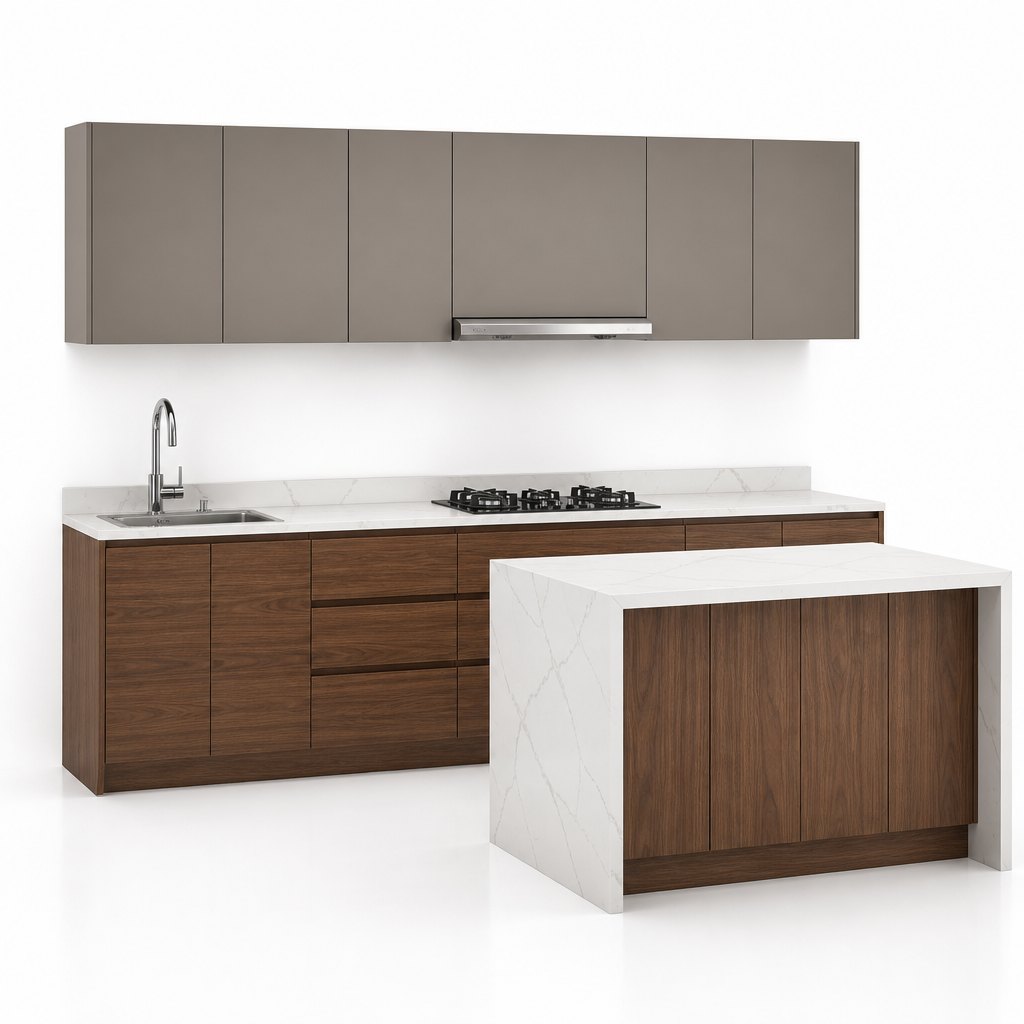
MOQ and lead time20 pcs per model; widths, the one-panel or two-panel layout and a two-tone split with a painted run may be mixed inside the 20. A custom smoke depth, a non-standard veneer or a bespoke stain adds roughly 7 to 10 days. 20 to 35 days production after veneer and colour approval, plus sea freight to Felixstowe, Southampton or Dublin
ComplianceISO9001, CE, SGS and FSA factory certifications; E1 low-emission board and low-VOC water-based lacquer; FSC-certified plywood and veneer, and CARB P2 board for US programmes, available on request

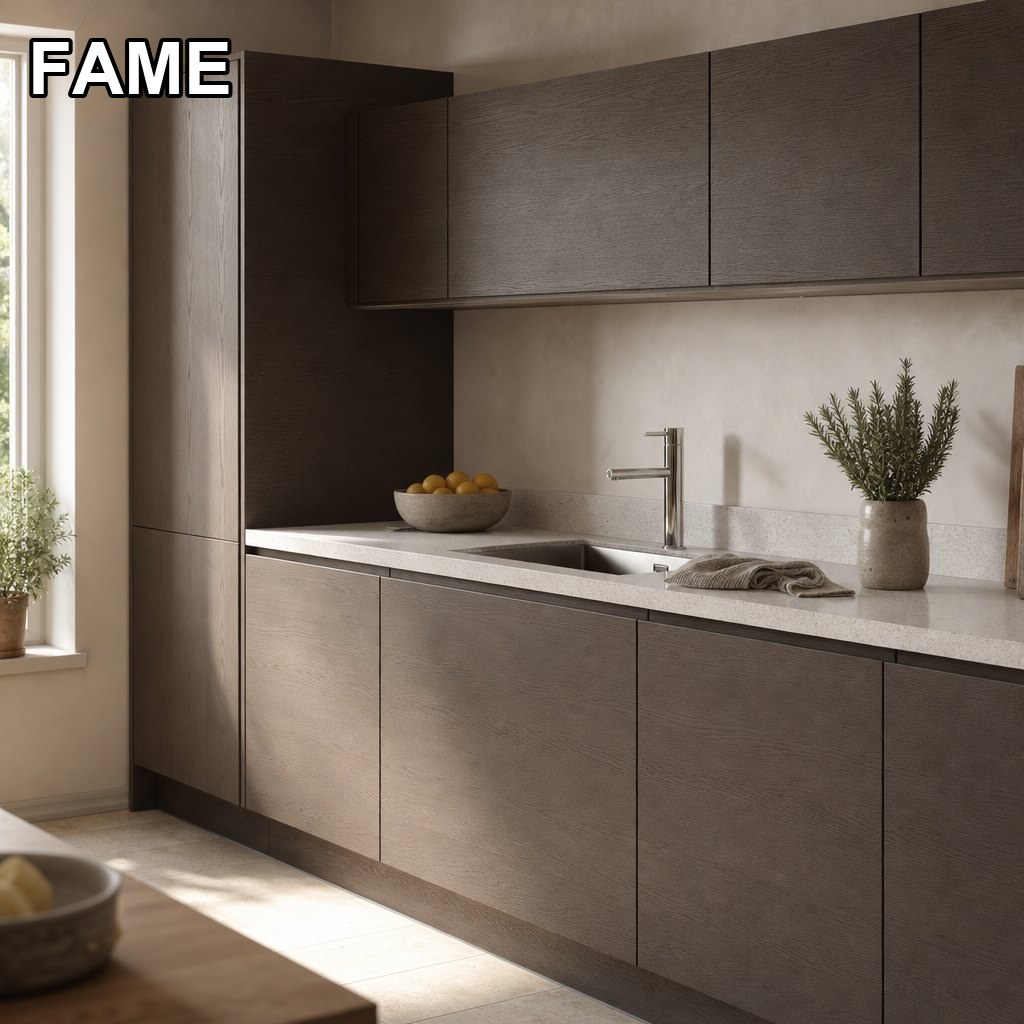
In a Real Kitchen

Smoked Oak Veneer Kitchen — Real Veneer, Wire-Brushed Before Lacquering in a real kitchen setting

Every FAME kitchen program is produced in our 20,000 m² factory, inspected against the same standards we ship to the world's top-10 bathroom brands, and container-optimized for your program.

Product FAQ

How is smoked oak different from a stained or printed dark oak?
Three different things, and they age differently. A print is a photograph of wood reproduced on a foil or a melamine paper: the pattern repeats, and it is the same on every door. A stain is pigment sitting in the top few microns of a pale veneer, so a scratch or a sand-through shows pale timber under a brown film. Smoking is a chemical reaction: the oak is fumed in a chamber and the tannin in the timber itself darkens through the surface, so the colour goes a millimetre or two into the veneer and a scratch shows smoked oak. This kitchen is the third. It also has a wire-brushed surface, which is done before lacquering — a print can imitate that texture but cannot have it.
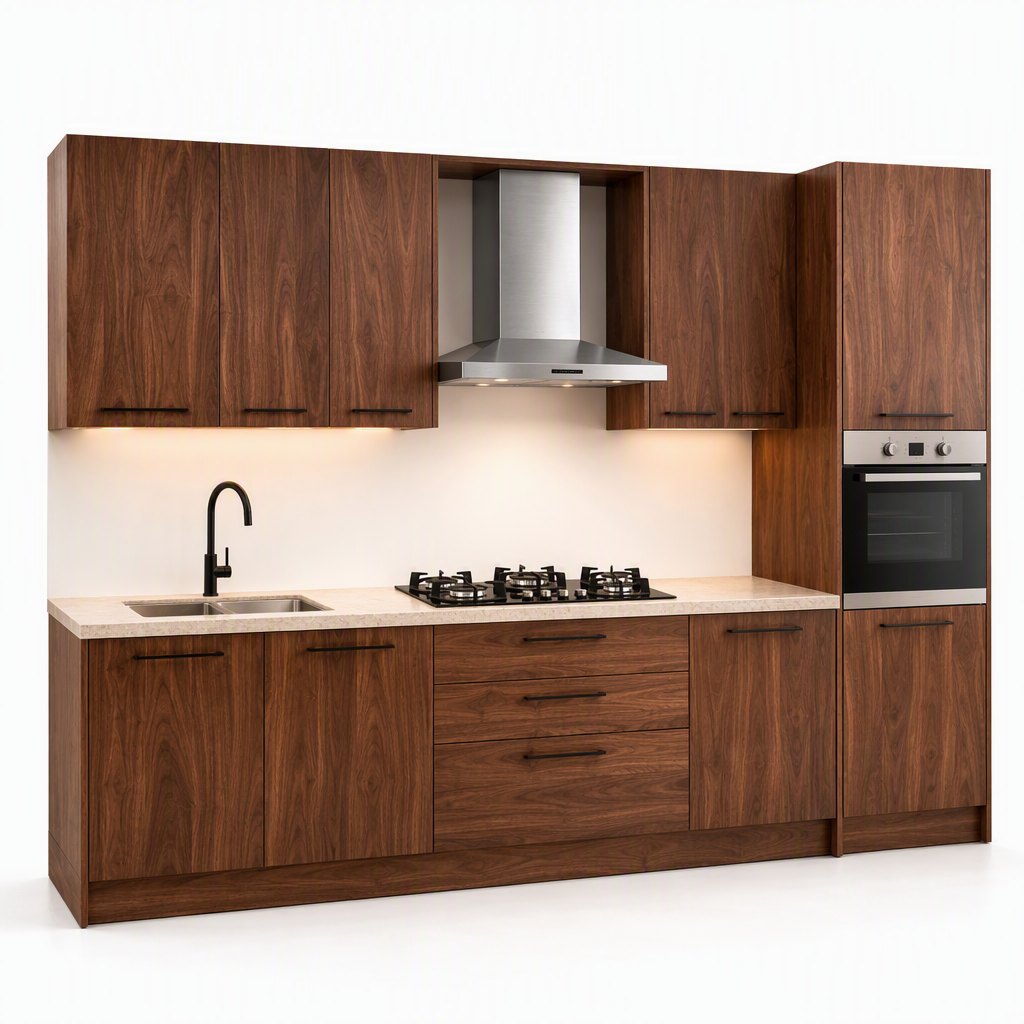
Is this the same as the walnut kitchen already in the range?
No, and the difference is not just tone. Walnut is a warmer, browner timber with a more open, swirly figure and it is used as solid wood in that programme; this is a cool grey-brown smoked oak veneer on an MDF core, wire-brushed, with the grain running straight. Put a door from each side by side and the walnut reads red-brown and the smoked oak reads grey-brown. If a project wants warmth, take the walnut; if it wants a dark wood that still looks architectural and lets the worktop do the light, take this one.
Will a real veneer face delaminate or lift in a kitchen?
Not if the substrate and the edges are right, and not if the panels are stored properly before installation. The veneer is 0.6mm sliced oak on 19mm MDF — not on chipboard — pressed with a proper adhesive film, and every edge is banded before the front is lacquered, so there is no exposed veneer edge to lift. The two real failure routes in a kitchen are water getting behind the veneer at an unbanded edge, and doors stacked flat against each other in a damp site container for a month. That is why the doors ship crated on edge with interleaving and why the finger groove is machined and sealed rather than left as a raw cut.
Does the grain match across a run of eight doors?
It is matched, not identical, and that is the honest answer for any real veneer. We slice from one flitch per order and lay the faces in a four-way sequence, so consecutive doors continue the grain and the colour movement across the run rather than restarting. Within a batch the variation is small; between batches it is visible, which is why we keep the approved panel and the flitch record on file for repeat orders and ask for a signed 200 x 300mm face panel before the first run. A foil or a print gives you eight identical doors — that is its advantage and also the reason it looks like a foil.
What happens if a door is damaged on site?
A single veneered door can be replaced, because the drilling for the hinges and the runner is jig-set and repeatable: give us the door number from the crate label and we cut the same size from the same flitch record if it is still in stock. What cannot be done is a site repair that hides — a veneered face cannot be filled and disguised the way a painted face can. For rental and multi-family programmes where that risk matters, the same kitchen is available with painted fronts on the same carcass and drilling, so a damaged door swaps to a finish that can be touched in.
How does a 20-piece order work, and what are the lead times?
Twenty pieces per model, and the 20 can be split across widths, the one-panel or two-panel layout and a two-tone split with a painted run. A custom smoke depth or a non-standard veneer needs a dedicated pressing and adds roughly 7 to 10 days. Production runs 20 to 35 days after veneer and colour approval, and sea freight to Felixstowe, Southampton or Dublin adds 30 to 35 days. We are a 20,000 m² factory in Jiangshan, Zhejiang, supplying several of the world's ten largest building-material brands on the same lines.

Quote This Kitchen Program

Tell us layout, finish and destination port — we'll come back with pricing, lead time and a sample proposal.

Request a Quote