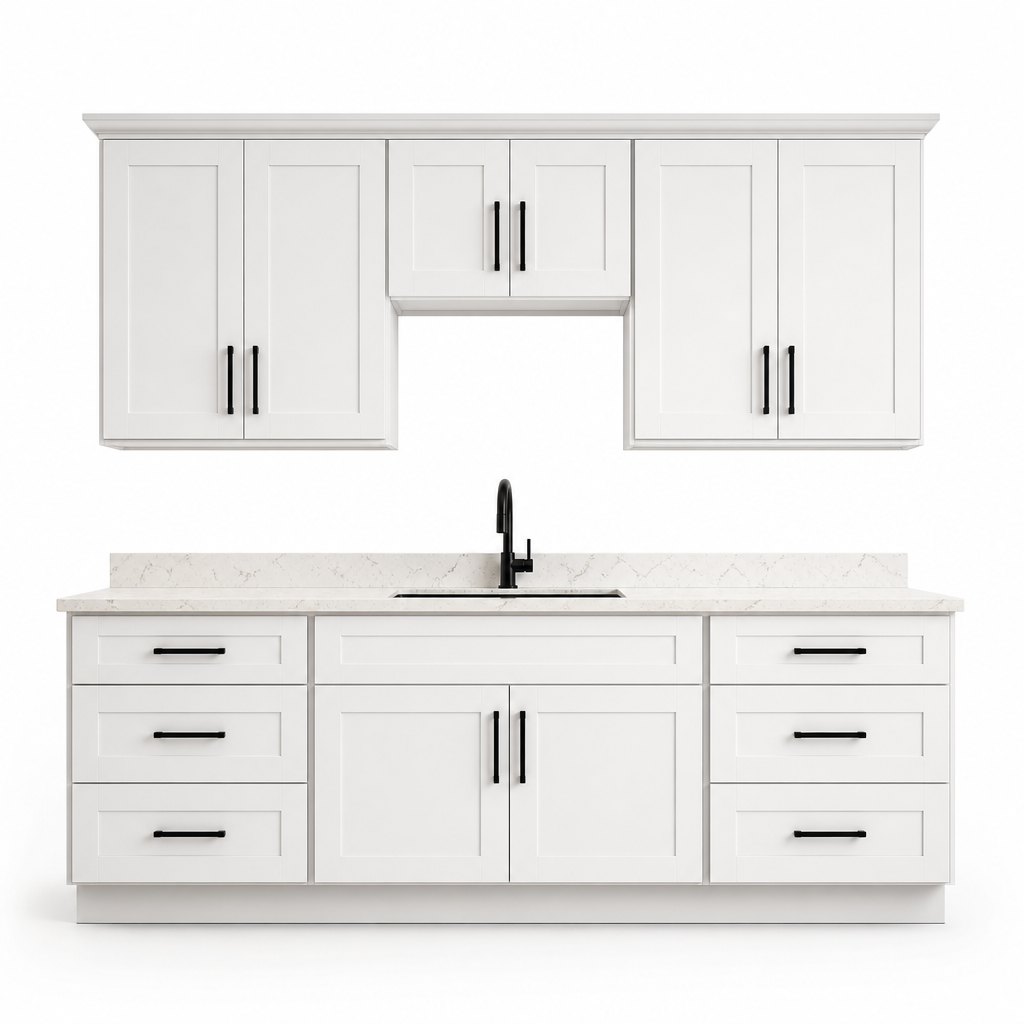
Shaker Style Kitchen Set
The white shaker volume seller on the same framed door logic, for programmes that need a neutral base colour.
View product →
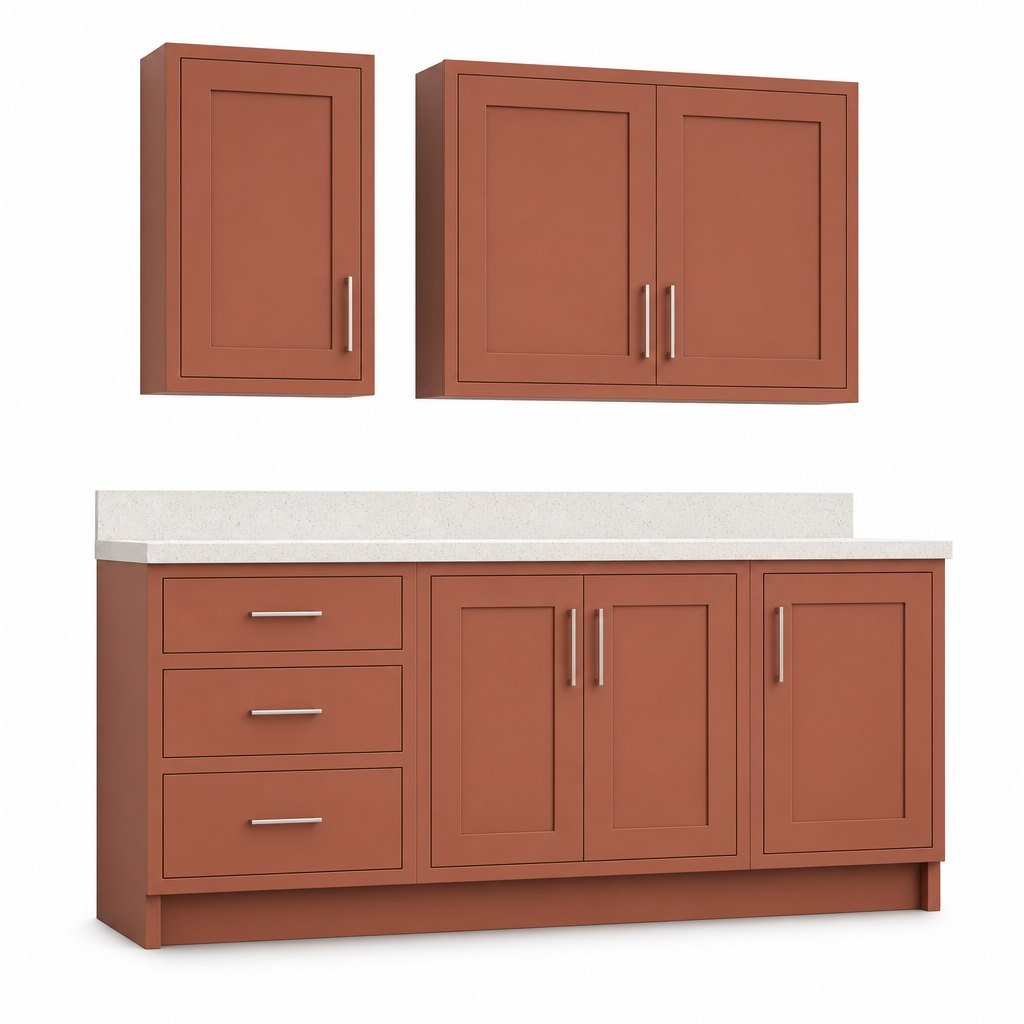
Terracotta arrived in US kitchens the way warm oak did three years ago: first in a photograph, then in a showroom, then in a dealer's opening order. What most of the imported versions get wrong is the construction underneath the colour. A terracotta door on a frameless European box is a coloured slab in a room that was designed around framed cabinetry — the reveal lines are wrong, the doors sit proud of the openings instead of inside a frame, and the whole run reads as a flat-pack kitchen that has been painted. This run is built the other way round. It starts with a 1.5 in solid hardwood face frame, the structure a US cabinet installer expects to find, and hangs 2.25 in shaker doors on it full-overlay with a 3 mm shadow gap. The colour is a muted clay terracotta at 5 to 8 gloss units — a warm red-brown that shifts toward rust under 2700K light and toward pink under daylight, which is exactly why the sample has to be approved in the room rather than on a screen. Boxes are 18 mm plywood, the worktop is 30 mm quartz on a 40 mm square edge, and the whole programme ships flat-packed for US dealers or assembled for project work, from 20 pieces per model.
SKU: FAME-KC-TFF · MOQ: 20 pcs · Sample order available
| Programme scope | Full kitchen run on a face-frame programme — base units, wall units, tall units and a recessed plinth on one door, frame and colour; widths in 75 mm increments from 300 to 1200 mm, with the same 3 mm overlay gap across the range; supplied flat-packed or assembled. |
|---|---|
| Construction | 19 mm solid hardwood face frame, 1.5 in stiles and rails, dowelled and glued to an 18 mm plywood box with a 19 mm top and bottom rail; frameless European boxes available on the same doors where a project has already been specified that way, but the two cannot be mixed in one run because the overlay arithmetic is different. |
| Fronts | 19 mm MDF shaker doors and drawer fronts, 2.25 in flat rails and stiles, recessed flat centre panel with a 6 mm step; full-overlay on the face frame with a 3 mm even shadow gap; 19 mm solid oak or ash shaker fronts available on the same frame for a two-tone run; slab and slim-shaker fronts on request. |
| Finish | Terracotta clay matt lacquer at 5 to 8 gloss units, two-coat polyurethane over a pigmented primer, spray-applied and oven-cured; matched to RAL 3012, NCS S 4030-Y70R or a supplied sample; tested to a 200-revolution Taber abrasion and a 72-hour 40 degree C / 90 percent RH humidity cycle without gloss shift or edge lift. |
| Carcass | 18 mm plywood boxes with sealed ABS edges, 8 mm back panel, 32 mm system drilling and a 19 mm hardwood face frame; 18 mm E1 chipboard available as a cost-down where the run is dry and inland; adjustable legs at 100 to 150 mm behind a clip-on toe kick at 100 mm recess and 60 mm setback. |
| Worktop | 30 mm quartz in white with a fine light speckle, 40 mm flat square edge and a 100 mm matching upstand from the same slab; 20 mm quartz, 38 mm laminate or 12 mm sintered stone on the same boxes; sink and hob cut-outs templated from the project drawing, with the sink centre line set to the 900 mm sink base. |
| Hardware | Blum clip-on concealed hinges with three-way adjustment and Blum TandemBox or Legrabox soft-close drawers as the specified option, or a cost-equivalent Chinese runner set on the same 32 mm drilling; drawer loads 30 to 70 kg depending on the box; 128 mm slim brushed-nickel bar pulls, with a 30 mm knob option on the same drilling. |
| Internal fit-out | One adjustable shelf per wall unit on a 32 mm system, cutlery inserts, a 300 mm pull-out waste under the sink, a corner carousel and a tall larder pull-out available as inserts on the same box; appliance and sink bases supplied open with a service void and ventilation cut-outs to the appliance drawing. |
| Installation | Dowel-and-cam assembly with pre-drilled face frames and confirmat fixings at the frame joints; a 3 m run assembles in roughly 4 to 5 hours with two fitters, about an hour more than a frameless box because the frames have to be pulled together and checked for a straight reveal line before the doors go on; wall units hang on a steel rail supplied per run; an English-language assembly drawing and a parts list by unit code ship with every order. |
| Packaging | Boxes flat in 5-layer cartons with foam corner blocks — a 600 mm base box ships at roughly 70 x 52 x 17 cm and 34 kg gross; face frames bundled per unit and banded to the matching carton; doors and drawer fronts in a separate rigid face-board crate in door-number order; a 10 m run lands at approximately 5.2 cbm flat-packed, against 4.5 cbm for the same run frameless. |
| MOQ and lead time | 20 pcs per model; colours, widths, two door styles and a two-tone split may be mixed inside the 20; colour approval 10 to 15 days where a RAL or NCS match is required, sample door 7 to 10 days, production 30 to 35 days, FOB Ningbo or CIF to Los Angeles, Long Beach, New Jersey or Savannah. |
| Compliance | ISO9001, CE, SGS and FSA factory certifications; E1 low-emission board and low-VOC lacquer; CARB Phase 2 compliant plywood and MDF for US import, with a batch formaldehyde declaration on request; FSC-certified plywood and oak available; IP44 lighting option where LED strip is specified into a wall unit. |
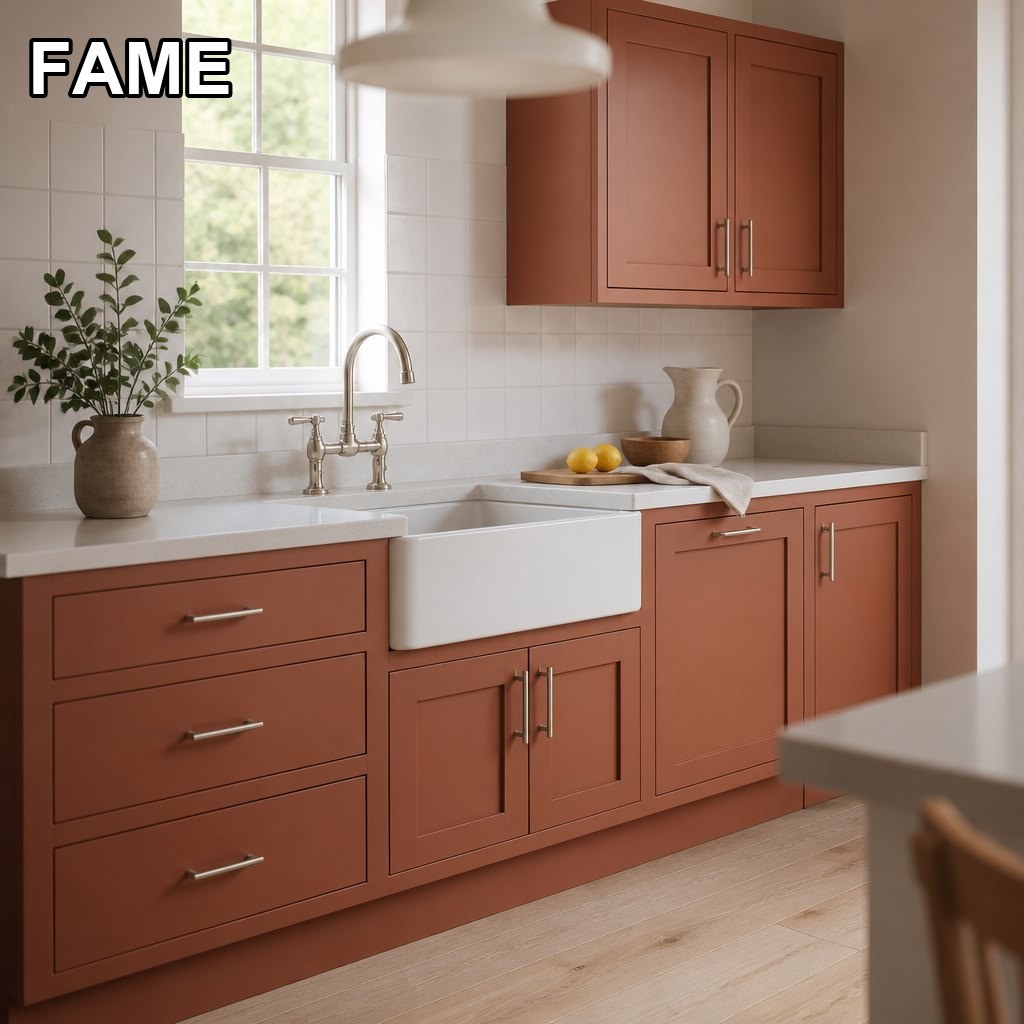
Every FAME kitchen program is produced in our 20,000 m² factory, inspected against the same standards we ship to the world's top-10 bathroom brands, and container-optimized for your program.
The white shaker volume seller on the same framed door logic, for programmes that need a neutral base colour.
View product →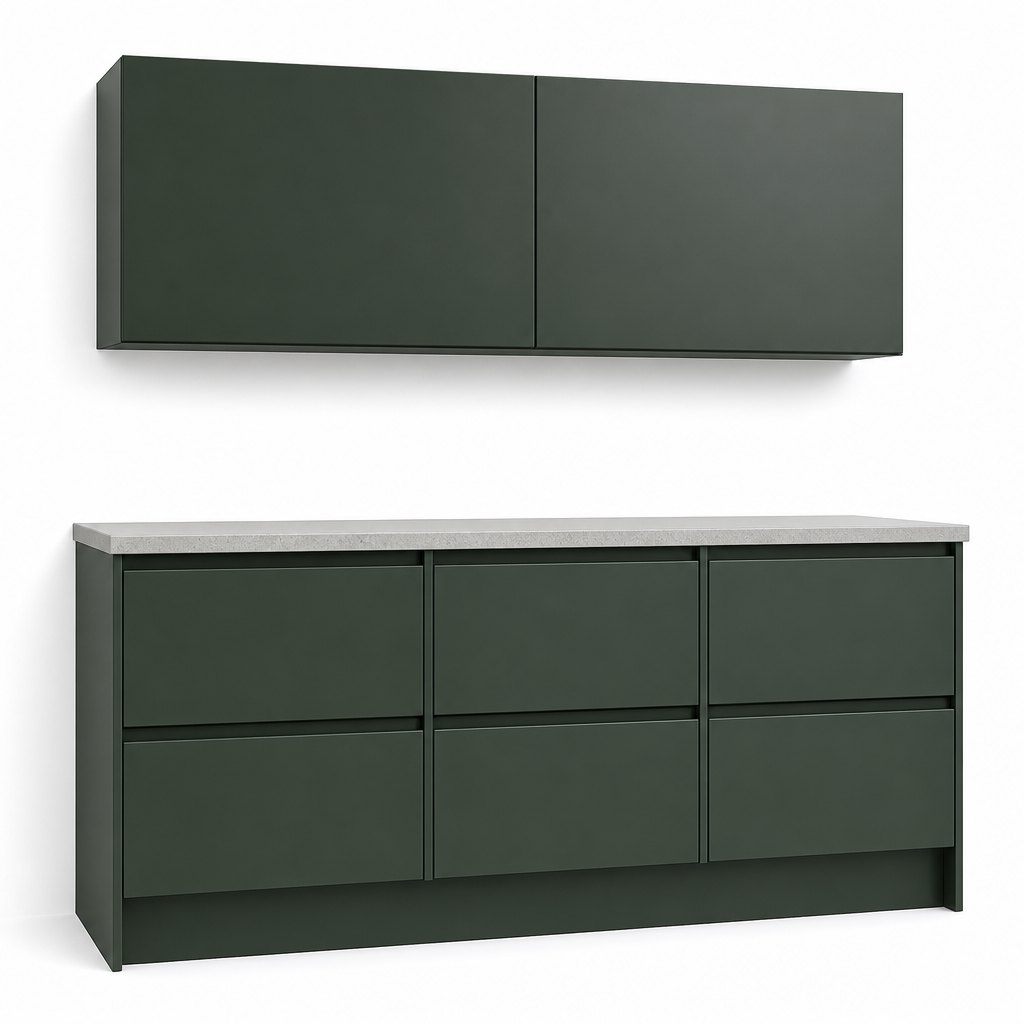
The other deep colour in the range, handleless on a frameless box rather than framed and overlaid.
View product →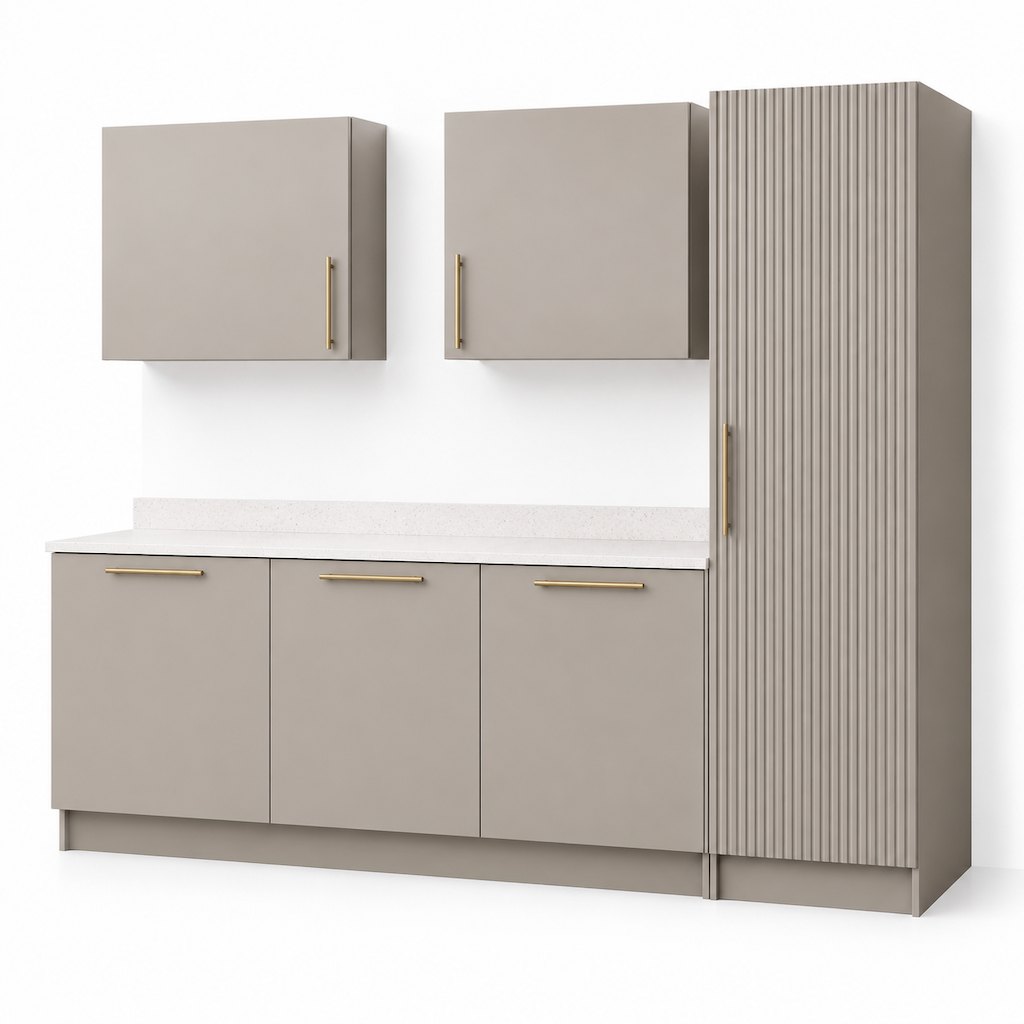
The neutral alternative when the room needs texture instead of a strong clay colour.
View product →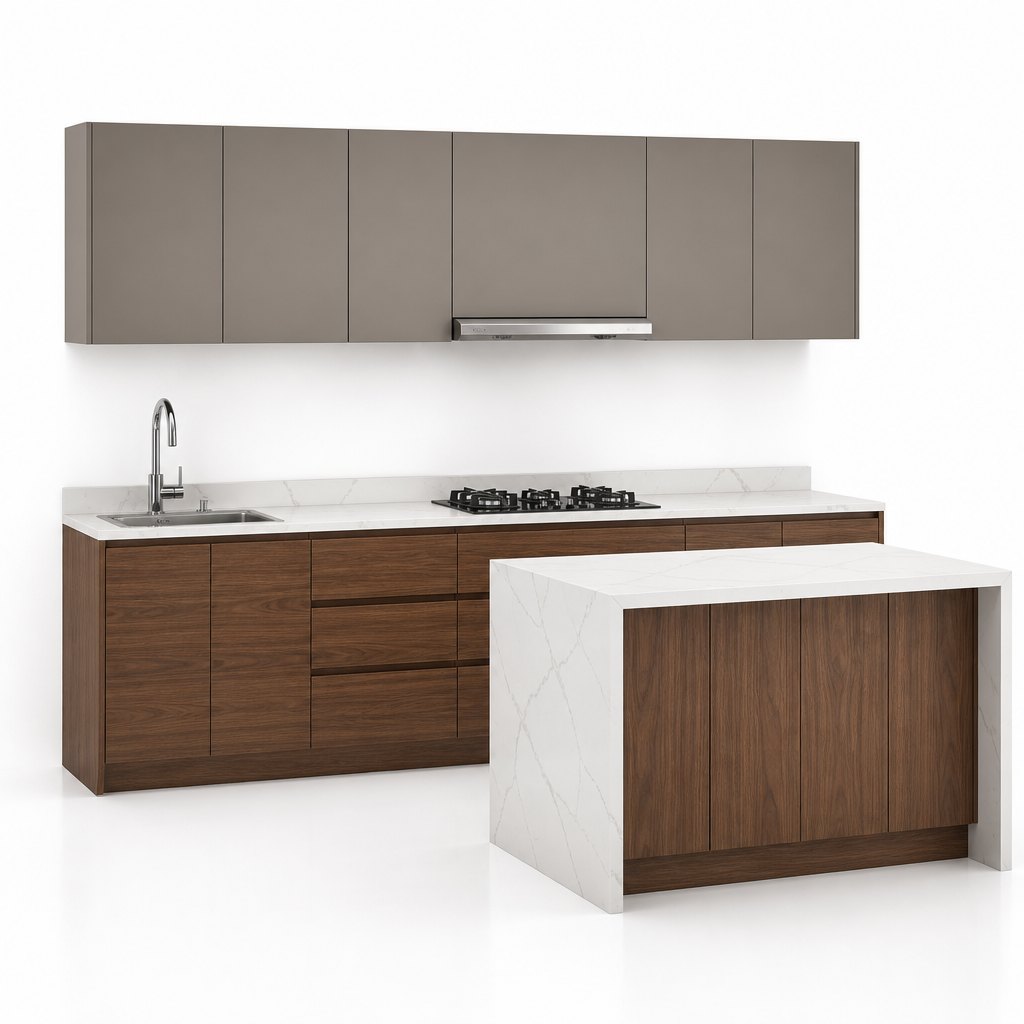
The frameless handleless format, for projects that have already specified a European box.
View product →Tell us layout, finish and destination port — we'll come back with pricing, lead time and a sample proposal.
Request a Quote