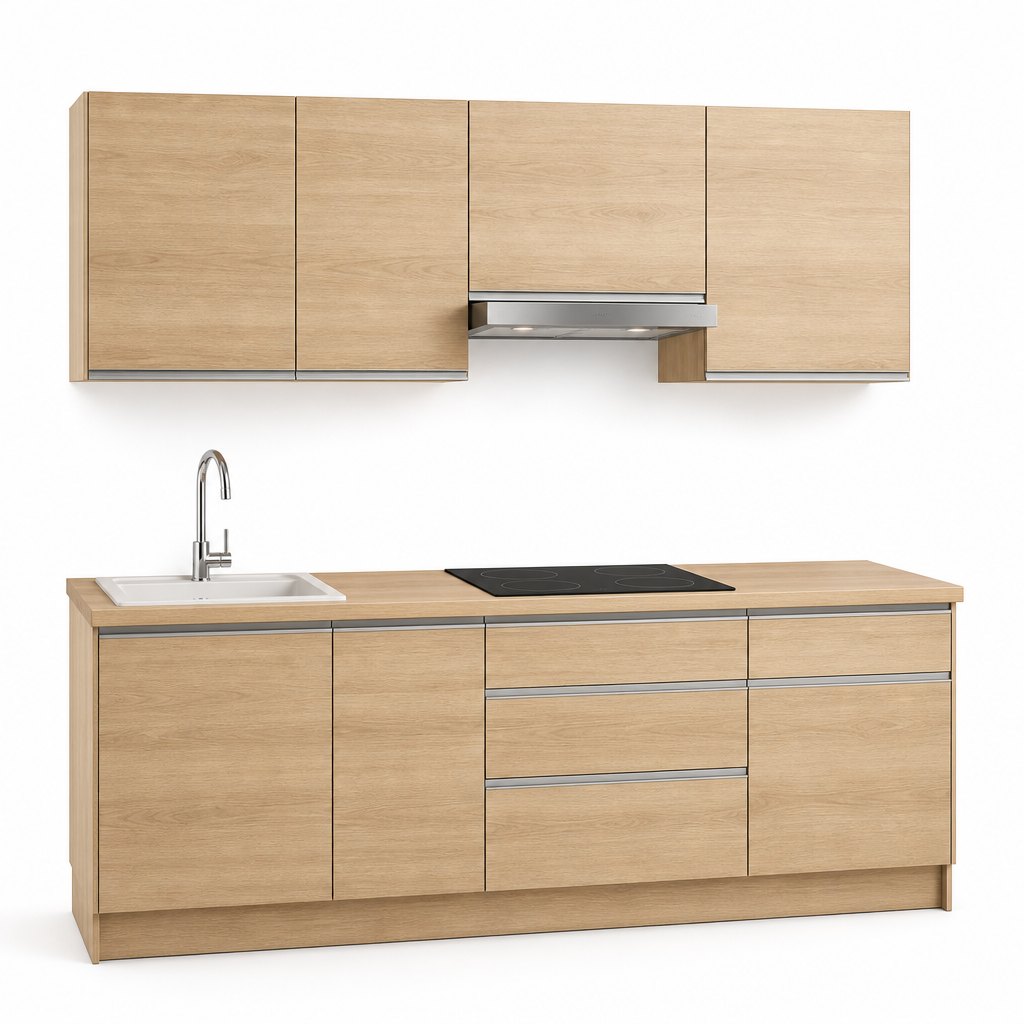
Oak Wood-Grain Kitchen
The natural-lacquer version of the same veneer, warmer and more amber than the limed finish.
View product →
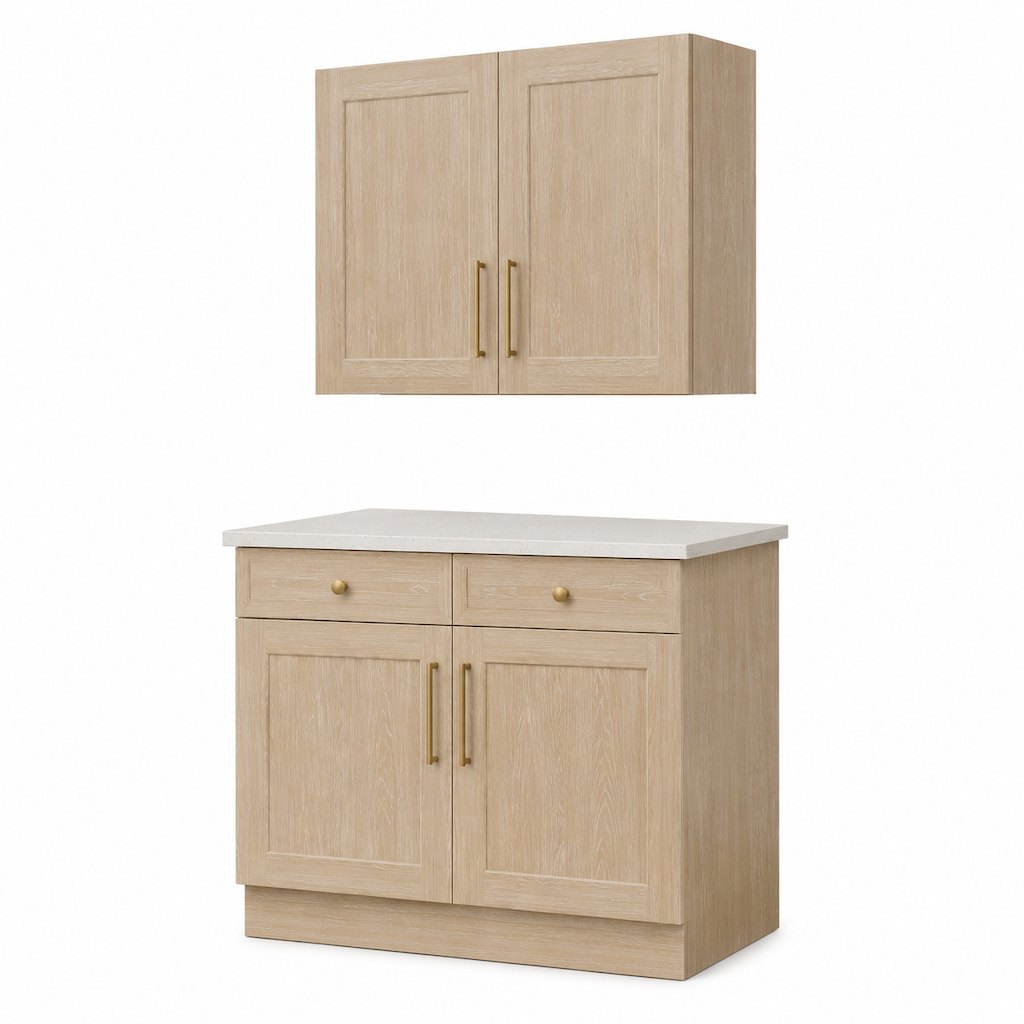
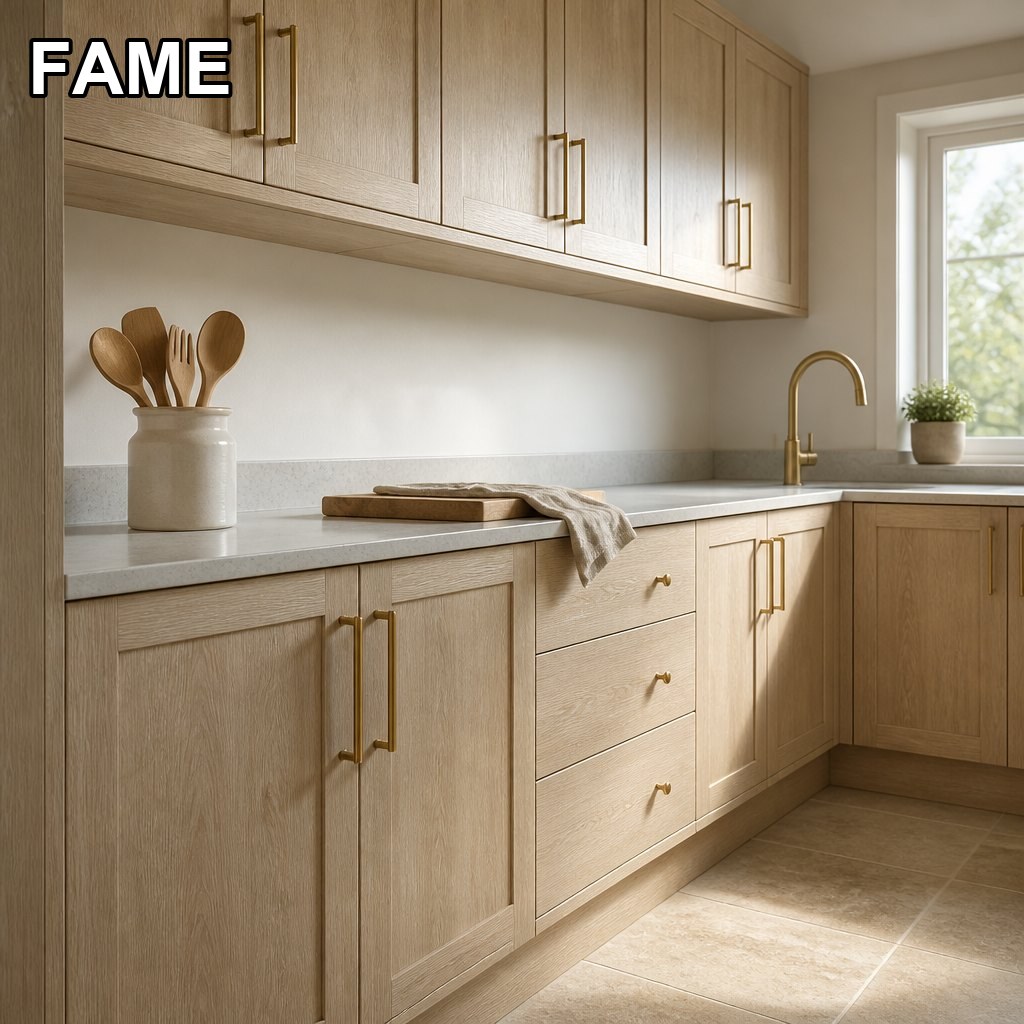
Limed oak answers a specific complaint about oak kitchens: natural oak under a clear lacquer reads orange the moment afternoon sun lands on it. Liming works a white pigment into the open pores before the lacquer goes on, so the grain draws as fine silver-white lines over a warm sandy ground and the door stays pale even in a north-facing room. It is not a painted door — the grain is still visible and still tactile under a finger — which is why it holds up in a coastal kitchen where a flat painted front starts to look like a showroom sample after two summers.
SKU: FAME-KC-LO · MOQ: 20 pcs · Sample order available
| Program scope | Base, wall and tall units as one coordinated limed-oak run; 1500 mm base run plus a 600 mm wall unit shown. Modular widths 300–1000 mm on a 100 mm grid, single finish across base, wall and plinth |
|---|---|
| Construction | 18 mm plywood carcass with sealed ABS edges, 8 mm back panel, 32 mm system drilling; 570 mm deep × 720 mm high base units, 350 mm deep × 720 mm high wall units, 100 mm recessed plinth |
| Fronts & handles | 19 mm MDF core with a slim five-piece shaker face: 57 mm solid-oak stile and rail frame, 6 mm recessed centre panel, 3 mm gap between fronts; 160 mm brushed brass bar pulls on doors and 30 mm brass knobs on drawers on a 128 mm pitch |
| Finish | Limed oak — white pigment grain filler worked into the open pores of a straight-grain oak veneer, then two coats of 10-degree matt lacquer; the pigment sits in the grain rather than on top of it, so the surface stays tactile and the colour stays pale |
| Worktop | 20 mm pale warm-grey quartz with fine mineral speckle, square 20 mm edge, 20 mm overhang; 12 mm sintered stone or 40 mm solid limed oak on the same carcass |
| Hardware | Blum soft-close hinges and Blum TandemBox runners optional, DTC equivalent on the same 32 mm drilling; 128 mm pitch on all pull drilling so hardware can be swapped without re-drilling |
| Plinth & lighting | 100 mm recessed plinth in the same limed oak finish; optional 24 V LED strip under the wall units with the driver housed in the carcass, and a matching quartz upstand |
| Packaging & MOQ | KD flat-pack cartons with corner protection and front-edge foam, or assembled; MOQ 20 pieces per model; ISO9001, CE, SGS, FSA-grade board |
Every FAME kitchen program is produced in our 20,000 m² factory, inspected against the same standards we ship to the world's top-10 bathroom brands, and container-optimized for your program.
The natural-lacquer version of the same veneer, warmer and more amber than the limed finish.
View product →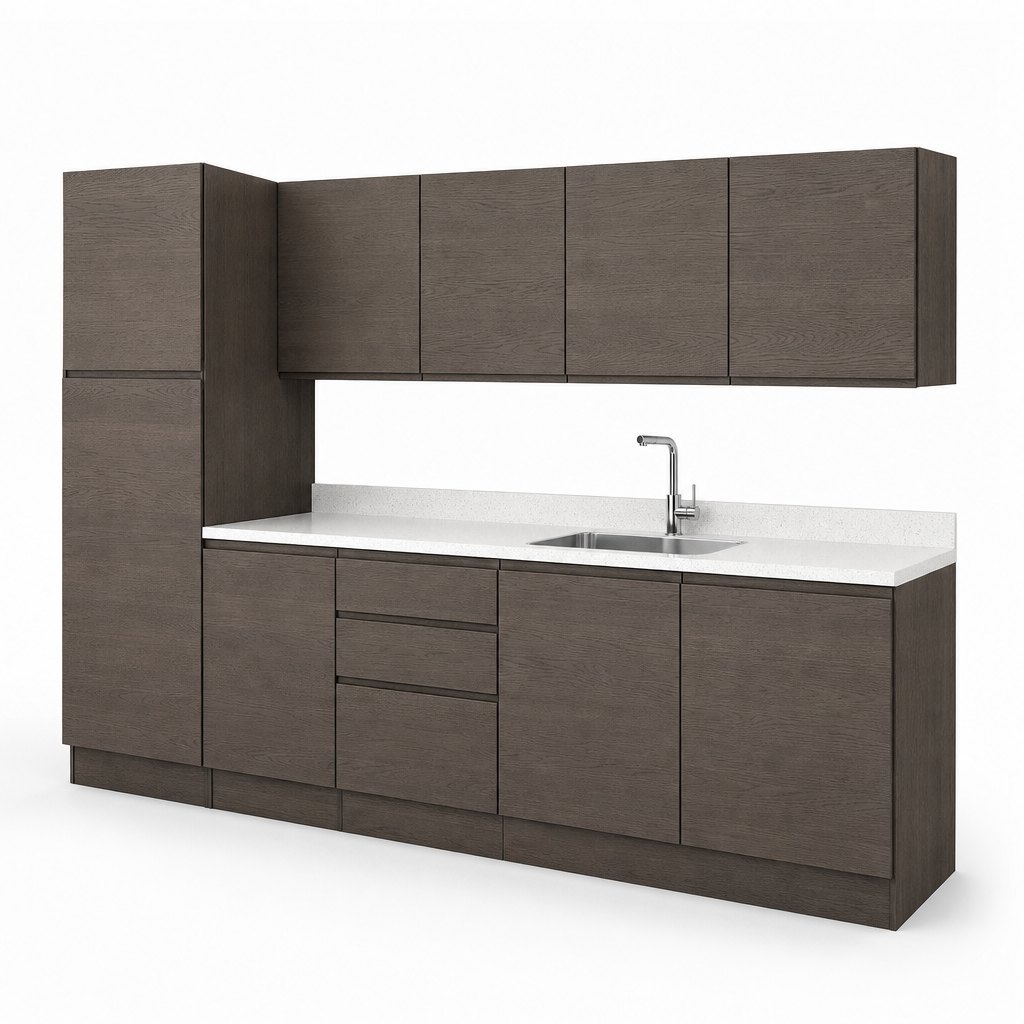
The dark end of the oak family, for rooms where a pale front would disappear against the walls.
View product →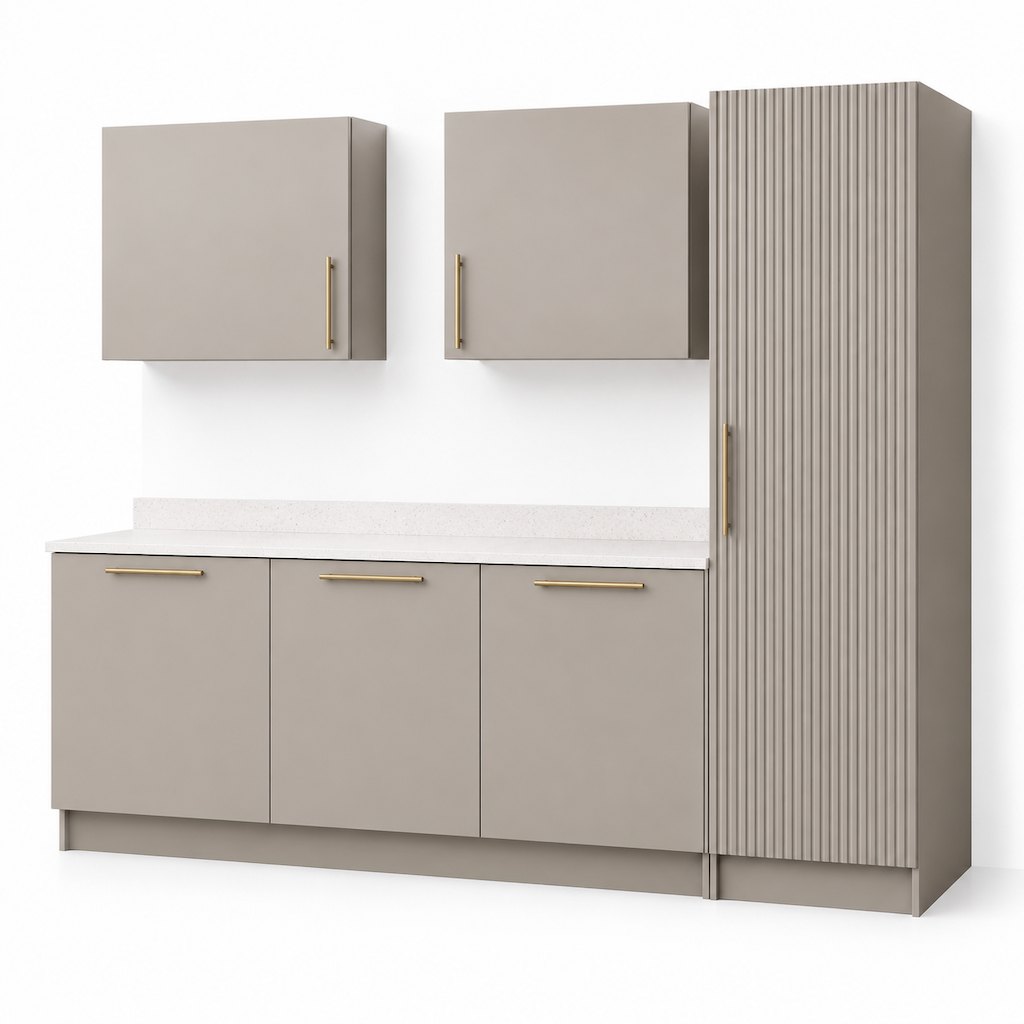
Vertical texture instead of shaker frames, in a flat greige lacquer rather than timber.
View product →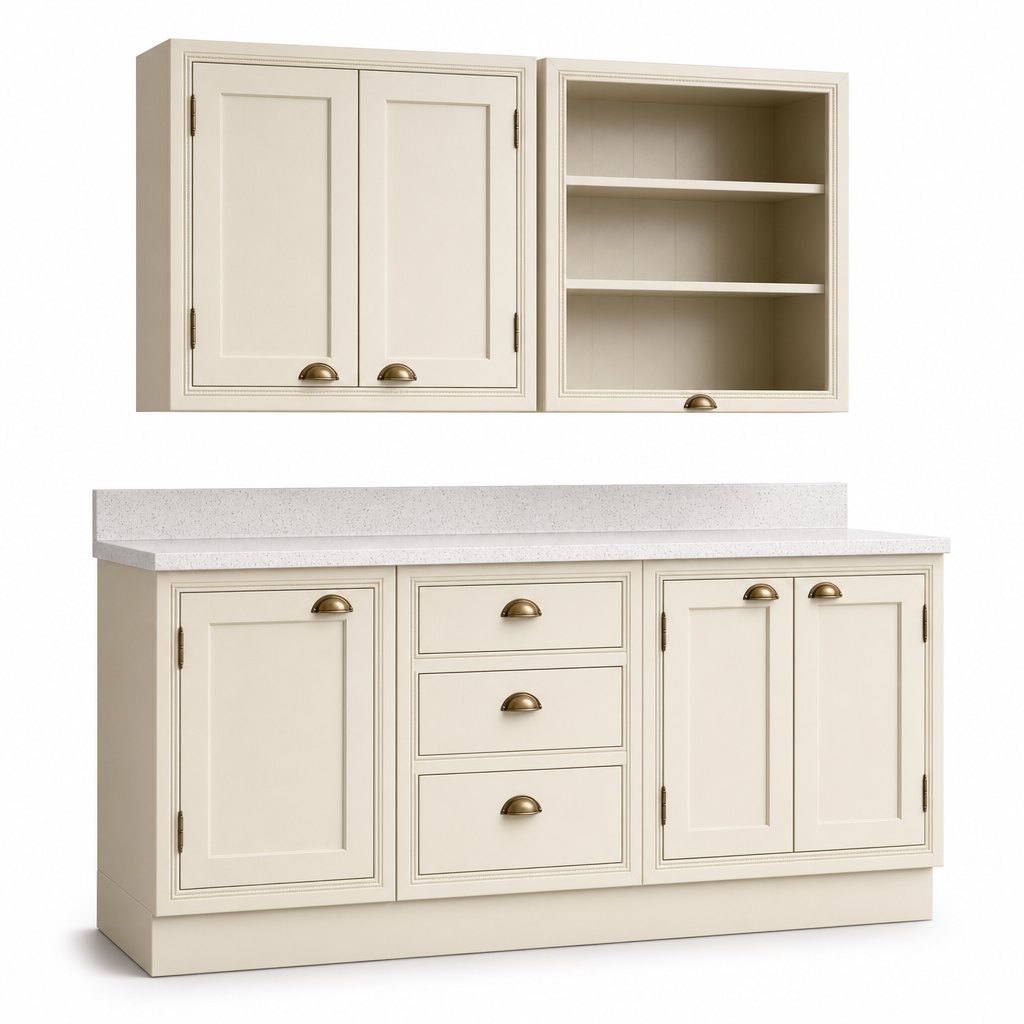
The traditional framed construction, painted rather than limed, for period properties.
View product →Tell us layout, finish and destination port — we'll come back with pricing, lead time and a sample proposal.
Request a Quote